The founders of London-based Two Fresh production company are venturing into feature-length storytelling with this powerful documentary that captures 50 years of geopolitical anxiety in Cyprus.
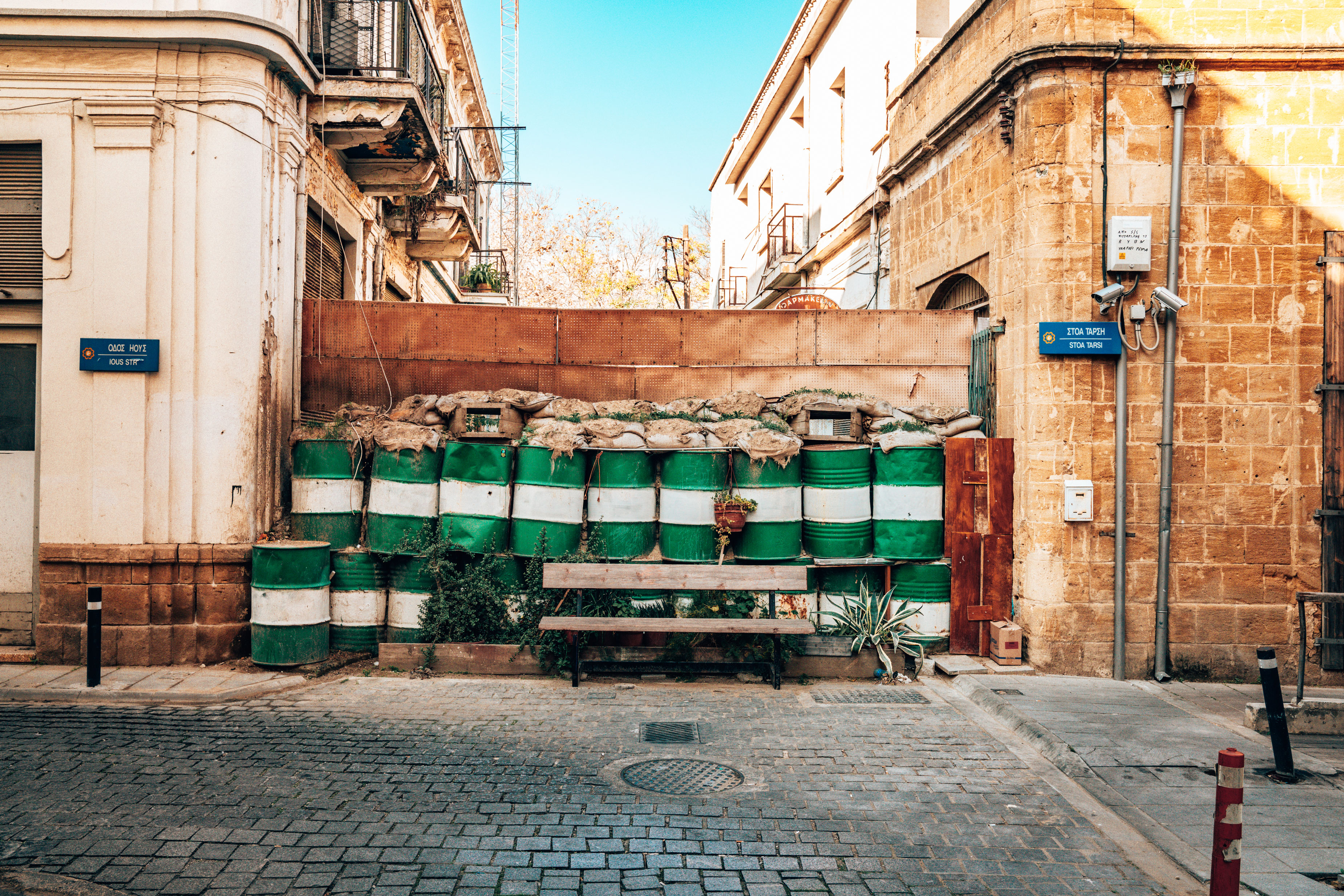
A few days after the release of his debuting feature documentary The Divided Island, I caught up with Turkish Cypriot director Cey Sesiguzel. He tells me that he spent 20 years researching the history of Cyprus. In those two decades, he spoke to his elders, visited Cypriot villages and collected stories from the survivors of the 1963 and 1974 conflicts. The Divided Island is his collaboration with Greek Cypriot producer Andreas Tokkallos, and it is a compelling look into the problem of Cyprus that divided its Greek and Turkish communities.
Sesiguzel’s documentary goes back to the second half of the 19th century and the building of the Suez Canal that opened the crossing of the Arabian Sea and eased shipping routes into India. It is a period of expansion for the British Empire and with its newly acquired naval base in Cyprus, the British were annexed to the island by the start of World War I. Following the collapse of the Ottoman Empire, they then saw the opportunity to proclaim the island a crown colony. The Divided Island examines the aftermath of Britain’s annexation to Cyprus and how it played out as the island’s two major Greek and Turkish communities started going against each other.
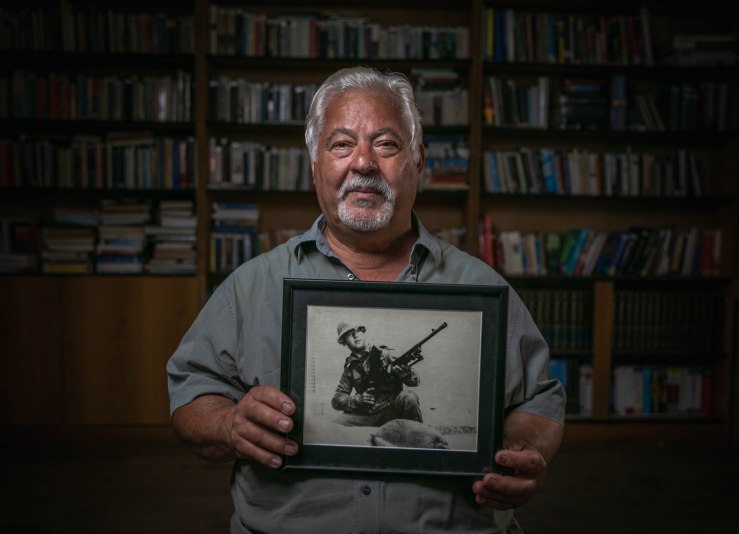
Key interviews with survivors from both communities describe a prevailing confusion in the mid-1950s, when Cyprus was still under British rule, bisecting the island’s otherwise united mosaic of cultures including Maronites, Latins, Armenians and Roma. Following independence and the establishment of the Republic of Cyprus in 1960, a mistrust escalated between the Greeks (who wanted a political union of Cyprus with Greece) and the Turkish (who feared for their existence as they were the minority). This led to 1963’s civil war, which had a disproportionate disadvantage to the Turkish Cypriot community and saw the destruction of their villages and homes forcing them into dire living conditions. In 1974 a coup led by the Greek military junta to overthrow Archbishop Makarios, and aiming to unite Cyprus with Greece, resulted in Turkish military intervention. It was a brutal evasion, which had devastating effects on the Greek Cypriot community, uprooting its people and displacing them from their homes and land.
In trying to drive the narrative from an unbiased perspective, the documentary has adopted a traditional style of talking heads revealing powerful personal stories. It also includes a historical analysis by two professors – the tale is very much guided by James Ker-Lindsay, British professor of political science, and Andrekos Varnava, Greek Cypriot professor and consultant historian. Their expertise is key to understanding a complex array of events and the war crimes that took place from 1955 to 1974.
Five decades later, Cyprus remains divided between the Greek Cypriot community in the south, and the Turkish Cypriot community in the north of the island. They are separated by a buffer zone controlled by the United Nations. Today, people in Cyprus live on a hot bed of ruling elites from both sides who have their own political interests. But finding harmony is long overdue, and The Divided Island is a striking reminder to work on our basic human right for peace in the increasingly tense landscape and highly militarised eastern region of the Mediterranean Sea.
We invited director Cey Sesiguzel for a conversation.
Georgia Korossi: Can you tell us about your collaboration with your film’s co-producer, Andreas Tokkallos?
Cey Sesiguzel: We went to secondary school together, and we’ve been friends since we were about 14 years old. Every summer holiday, as a lot of Cypriots in North London would do, we’d spent four or five weeks in Cyprus, and we’d come back with a different understanding of what the division meant; why was one side recognised, and the other wasn’t? How come one side had direct flights, and why did we have to show passports to cross? As teenagers, these were questions we started asking each other when we returned to school in September. So, it was a challenge, and it was trying to get a middle ground in this.
We both went off to different film schools; I specialised in directing, Andy [Andreas Tokkallos] specialised in editing. After we graduated in 2009, we set up a video production company and for 15 years we’ve been doing commercial and corporate work. But in 2020, I said to Andy, “Look, we need to use our skills to do something that we’re passionate about and that’s important to us and, hopefully, it will have a significant impact.” Then we started the process of creating our first feature film and I guess the rest is history.
Why does it matter to you to tell this story?
My family’s ancestral home was in Larnaca, and like many Greek Cypriots who were displaced from the north, there were many Turkish Cypriots who were displaced from the south. So, my parents were refugees from the south. This was fascinating to me as a teenager alongside the impact that this had on their lives, who also had direct loss in the family because of the war. And I know that a lot of people who suffered loss or trauma during the war might have easily taught their children to see the other side as the enemy. But despite their suffering, my parents always taught me to have compassion, and saying that it was fascism and hardline nationalists that had committed the atrocities.
I really got frustrated when I saw the Cyprus problem being discussed from one angle because it just perpetrated more hate and division; if you only show part of the story and discuss the Cyprus problem from 1974 onwards, it makes one side look like the perpetrator and the other like the victim. And I don’t think that‘s the way we heal. Showing the nuances of the truth can help us heal.
How, in your opinion, the media represent the division in Cyprus and which side is being discussed the most?
Growing up as a Turkish Cypriot in the UK, the Cyprus problem is discussed as a problem that started in 1974, and that Turkey invaded and seized half the island. And that is almost the end of the story of what happened. But the conflict started in the 50s and 60s and it’s a big problem that this is not really talked about in the west.
The Greek Cypriot media, the Orthodox Church and the schools, again perpetrate this narrative that the Cyprus problem started in 1974, and it just didn’t. That was agonising for me as a Turkish Cypriot when I was growing up, because all the suffering that happened in the 60s is kind of hidden in history. I think institutions like to put the blame on one side when really it is never just one side’s fault. And the truth is that the blame is shared by several different parties.
What did it involve bringing this story together?
Alongside my research of 20 years, we got one of the best Greek Cypriot historians [Andrekos Varnava], who is well versed in this subject, as consultant on the project, and he helped ensure that everything was fact-checked; most of the historical references are from his perspective. We also got a British political scientist [James Ker-Lindsay] and, I think, these people brought a good balance to the story.
One of the challenges that I had was that people would say, “Oh, well, it‘s by a Turkish Cypriot director, so there‘s going to be an element of bias.” And that’s one of the reasons why I purposely didn’t interview a Turkish Cypriot historian for the film. Also, having a Greek Cypriot producer made sure that we got that balance as much as we could during the post-production process.
Another challenge was that I wasn’t able to interview as many people as I would have liked. For example, I would have liked to get some EOKA [National Organization of Cypriot Struggle] members, but it was difficult for us to get them on camera. Whereas I didn’t have that issue with the TMT soldiers [Turkish Resistance Organisation]. And that’s a bit of a shame for me that people can’t see past my ethnicity. But in general, with the Greek Cypriots that I did get on camera, it was about building trust and letting them know that I’m not coming at this from the point of creating a blame game. So, they allowed me to share their personal stories on camera, and I’m grateful for that.
Would you say there’s a general camaraderie between young Turkish and Greek Cypriots today?
Here in the UK, people like me and my business partner of 15 years, Andy, we intermix way more than say the youth in Cyprus. But you do get people who are doing great grassroots work, and organisations like Unite Cyprus Now are doing stuff to get people together.
I think it’s more difficult in the outer regions of the island like Paphos and Karpass, which are on two opposite sides of the island, and might have fewer people traveling, intermixing and collaborating. But in and around Nicosia and Larnaca, you do get some good collaborations. As long as there’s a physical divide where people have to show their passports to go to the other side, it’s difficult and it’s not made easy for people; some of the crossing points take ages to pass because of traffic.
Why is it important to tell this story now?
Right now, the world is in a heightened state of conflict. There’s conflict in Russia and Ukraine that’s been going on for a long time. The conflict in the Middle East is as severe as we can remember in the past decades or so. And look at the latest election in America; division is rife throughout the world, everyone’s seeing the other side as the enemy.
I believe this film and the way it deals with a lot of these topics such as nationalism, tribalism, ethnicity, and propaganda, even though it’s looking at what happened 60 and 50 years ago, it’s still relevant to this day because of the geopolitics in and around where Cyprus is located. And from the test screenings that we’ve had, many people who are non-Cypriots have been able to relate to it with what’s happening now. The themes of colonialism, divide and rule that are covered, NATO and geopolitics, are very similar to what’s going on in the world today.
The Divided Island is in UK cinemas from 1 November.
 11polaroids.com